Ashtanga Yoga Classes in Basel
Monday:
19:15 - 20:30 Ashtanga Led Class + Yoga Nidra at Ashtanga Yoga Basel with Lladiu
Tuesday:
07:00-08:15 Ashtanga at Wege zu Dir Selbst (Westfeld) with Silvia (message in advance to reserve your spot)
18-19 Ashtanga Led Class at Ashtanga Yoga Basel with Lladiu
19:30-20:45 Ashtanga Inspired Led Class at B. Yoga with Amrta
Wednesday:
19-20:15 Ashtanga Led Class with Rita at Volta Yoga Innenstadt
19:15-20:30 Ashtanga Led Class at Ashtanga Yoga Basel with Lladiu
Thursday:
no class
Friday:
6-8 self practice at Yoga Bloom with Jill
9:15-10:30 Ashtanga Inspired Led Class at B. Yoga with Amrta
12:15-13:15 Ashtanga Led Class with Rita at Volta Yoga Innenstadt
Saturday:
8-10 Mysore style Ashtanga at Yoga Magnolia rotating between Kathrin & Jill (from August) —> please sign up until 18h on the evening before via mail to info@yoga-magnolia.com - if 0 people sign up, doors will not be opened, if one person signs up: class happens!
9-11 self practice at Ashtanga Yoga Basel with Lladiu
Sunday:
8-10am most weeks (see dates here) Mysore Style Ashtanga at The Looking Glass rotating between Gabi, Tanja, Jill & Claudia —> please sign up until 18h on the evening before via mail to tanja.hoch@gmx.ch - if 0 people sign up, doors will not be opened, if one person signs up: class happens!
FAQs
-
Ashtanga yoga is eight-limbed yoga. It’s a style of hatha yoga where breath and movement are synchronized and linked together in 6 set sequences.
It’s traditionally practiced in the morning, 5-6 days of the week (individual modifications to this are possible if needed).
During the practice there is a gazing point (drishti) for each position. You also focus on breathing with sound, solely through your nose, as well as engaging energy locks in the lower abdomen and pelvic region (uddiyana and mula bandha).
Breath, bandha and drishti together are called tristhana. Using tristhana following a set sequence of asanas (postures) that you learn by heart allows to build focus, heat and meditation.
Asana is one of the 8 limbs of yoga and you usually start with this entry point.
There are also yama (abstinences), niyama (observances), pranayama (breath control), prathyahara (sense withdrawal), dharana (sense withdrawal), dhyana (concentration) and samadhi (absorption, “enlightenment”).
-
The general principles outlined for practice are said to be ancient and have been given from teacher (guru) to student (shishyah) for a long time. This is transmission of knowledge is also called lineage (parampara).
We know that the basis for ashtanga yoga has been laid out approximately 2’000 years ago with the Yoga Sutras of Patañjali, but this text doesn’t mention asana except for the seat of meditation.
T. Krishnamacharya (1888-1989), the “father of modern yoga”, learned many asanas from his own teacher, R. Brahmacharya. Krishnamacharya then taught yoga to many students, some of which went on to share their teachings with the world, for example BKS Iyengar. He was his student and Iyengar yoga is a popular style of yoga known today.
According to the oral history of ashtanga yoga, Krishnamacharya also based his teaching on what he learned in a text called Yoga Korunta. The manuscript had been lost, apparently eaten by insects (which is not unheard of for these types of manuscripts). But recently, there has been a discovery of a text that could be the Yoga Korunta. It’s currently dated to be from the 18th century and it mentions things such as jump throughs and jump backs, which are essential components of ashtanga yoga.
The practice as we know it today has originated in Mysore during the 20th century, when K. Pattabhi Jois (1915-2009) was a student of Krishnamacharya. Pattabhi Jois could be named as the biggest influence on the ashtanga yoga practice, as he put what he learned from his teacher into 6 sequences and with the help of his students, spread it over the world. The founders of many styles such as vinyasa, jivamukti, power yoga and so on were students of his. Their styles are heavily inspired by the basic principles of the practice and are “descendants” of ashtanga yoga, so it’s had a huge influence on how yoga is practiced today.
Pattabhi Jois taught what he learned and compiled into the ashtanga yoga series as they’re known today to his children Saraswathi and Manju Jois who are both senior teachers. He also taught many students from all over the world. Most notably, he also taught his grandson Sharath Jois (1971-2024), who was a dedicated student and assistant teacher, until Pattabhi Jois passed away. Sharath himself was then appointed the head teacher of the ashtanga yoga lineage rooted in Mysore until November 2024 when he unexpectedly passed away. Since his passing, there hasn’t been a “lineage head” anymore, but ashtanga is still practiced by many and some students keep returning to practice in Mysore, India.
Saraswathi and Manju are still alive and teaching, as are hundreds of other teachers all over the world. Some are authorized or certified by the Jois family, many are not. Someone not being authorized doesn’t mean they aren’t a good ashtanga teacher. It mostly means that they didn’t have the time and/or resources to travel to Mysore repeatedly. So wherever you go, you may find teachers who differ a little bit in their approaches and philosophy, and you just have to see for yourself how you like it.
There have been some upsetting posthumous revelations about Pattabhi Jois committing sexual misconduct upon some female students, e.g. touching between legs, buttocks and breasts during adjustments. Some people have turned a blind eye to this darker aspect of the ashtanga yoga history for a long time or fail to mention it when explaining the history of ashtanga. If you know anything about humans and group dynamics, there can be a tendency of people not questioning someone (a teacher, their community’s beliefs and actions) or something (a system of practice) if they have had very life changing, positive experiences from it. Harmful dynamics and events like this are not exclusive to the ashtanga yoga history, but still it’s sad to see that something like this happened, even in a spiritual system that has non-violence as its first principle. It’s important that this aspect of the history is not hidden away.
Despite the darker side, to this day, the ashtanga yoga practice has been an important tool for many people to develop mentally and spiritually and accompany them through life’s obstacles. The daily discipline and ritual has a grounding effect in an ever changing world.
-
Essentially, it’s one on one teaching in a group setting. The name comes from the Indian city Mysuru (Mysore), where the tradition of ashtanga yoga comes from. If you scroll to the bottom of the page, there is a video example.
There is no music being played and each participant practices their sequence at their own rhythm of breathing. This means you only hear the meditative layers of different people’s breath and steps on the mat.
If the class is from 8-10am for example, you don’t have to start at 8am sharp. You can start at any point that makes it so you finish by 10. For example, if your current practice is 1h long, you can arrive at 9 and practice until 10.
In most Mysore style classes, verbal or hands on adjustments are given by the teacher, going from student to student. If you have an injury or don’t want to receive hands-on adjustments, please inform the teacher.
-
In a led class you are guided through an ashtanga yoga series via a teacher at the front calling out the instructions and asanas. Everybody moves in the same rhythm. Usually these classes do a half or full primary series. Intermediate series led classes are very rare. If you scroll to the bottom of the page, there is a video example.
Sometimes, the led class is “Ashtanga inspired”, which can mean that there will be slight variations to the “traditional” series.
-
Self practice means that a teacher opens the shala to do their own practice and you can come and join in to practice in company of one another. There is no teaching involved.
-
Basel used to have a morning Mysore program many years ago, but there have been many changes in the personal lives of the teachers involved and it stopped.
Maybe in the future a morning Mysore program can grow into existence, who knows. If you wish for this to happen, feel free to express your wishes and also the days and times in the morning you would show up via e-mail to tanja.hoch@gmx.ch
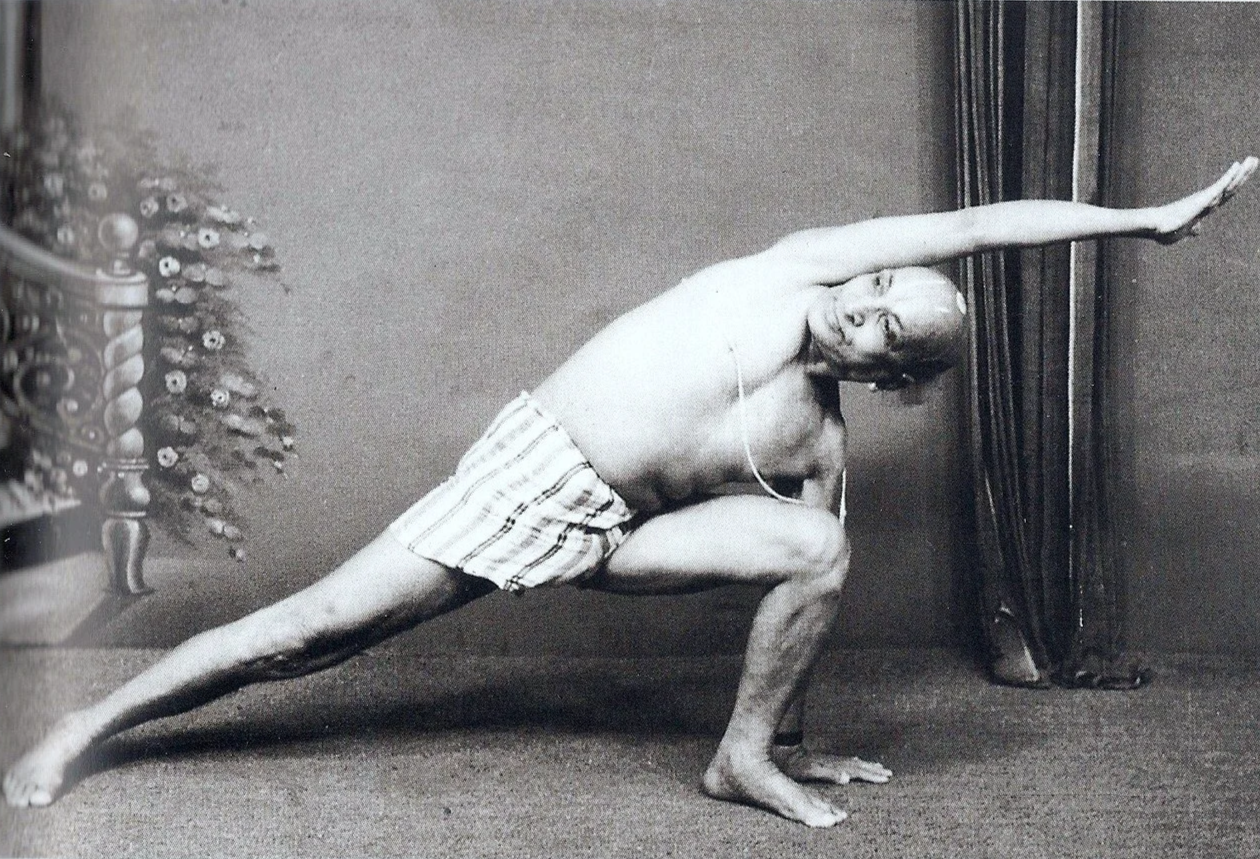
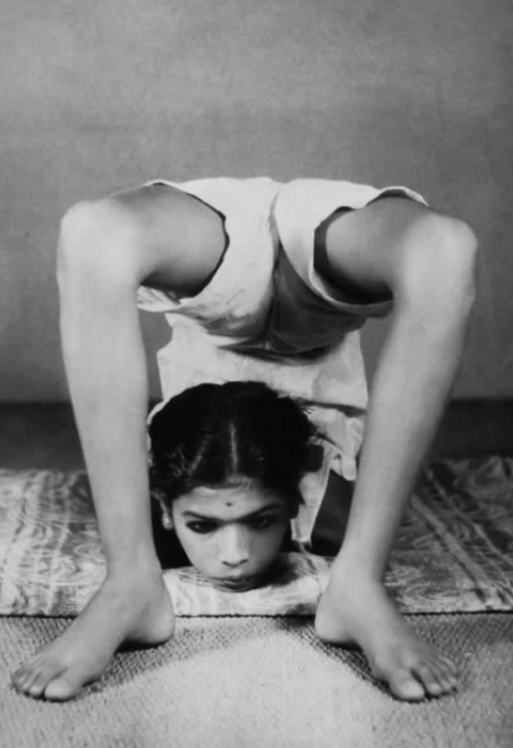
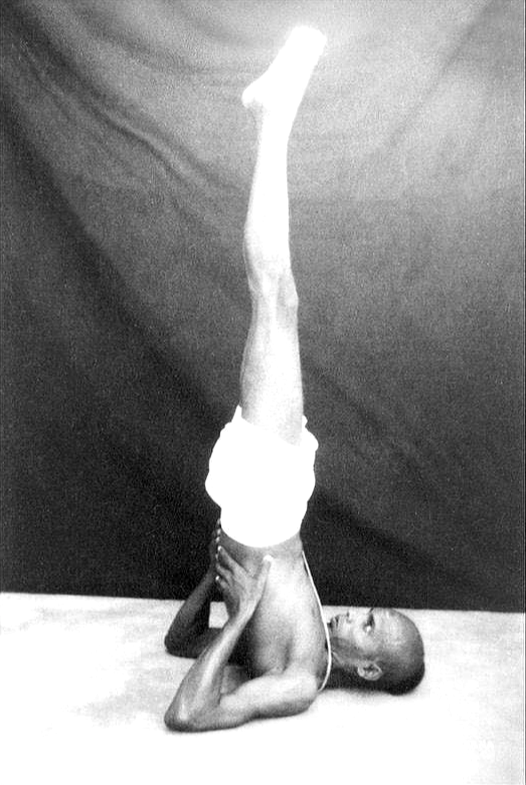
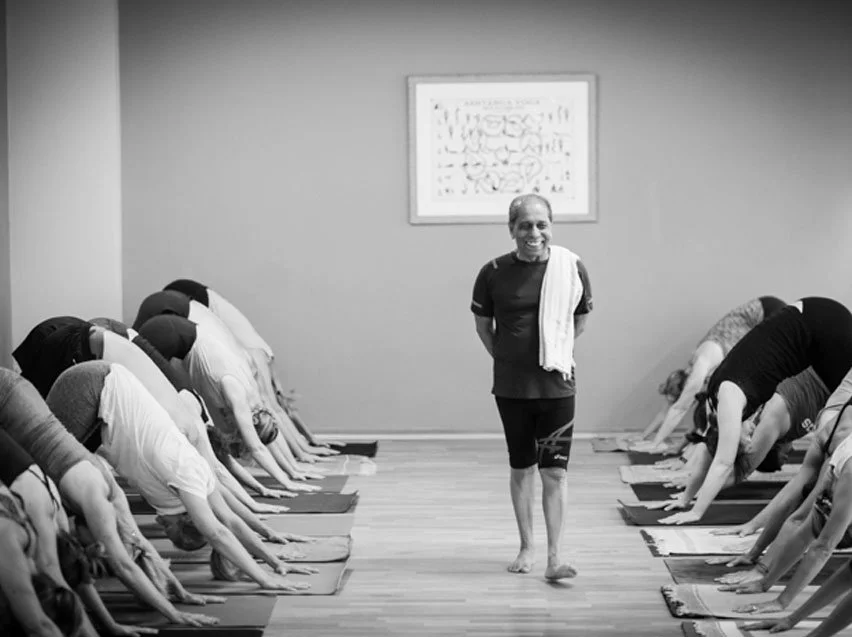
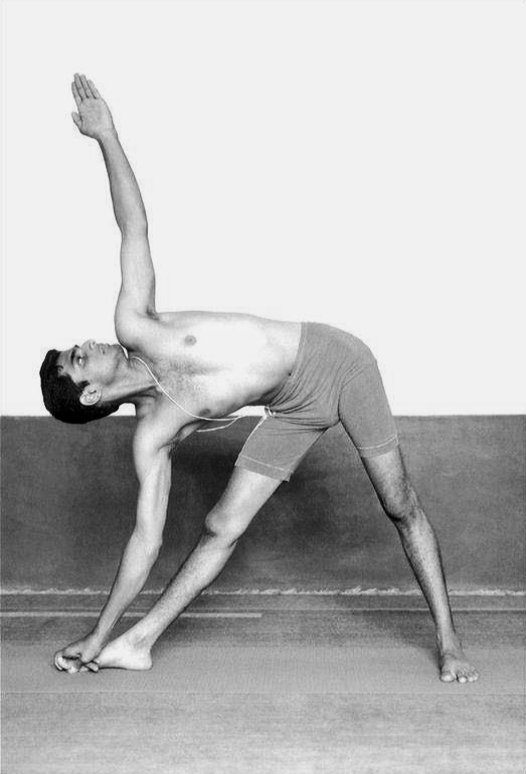
Below you can see T. Krishnamacharya, K. Pattabhi Jois, Saraswathi Jois, Manju Jois and Sharath Jois practicing or teaching ashtanga yoga asanas.
What does the practice look like?
The first video is a little intro to ashtanga workshop for absolute beginners.
The second video is a led half primary taught by Sharath Jois which shows three different people practicing. It provides some modifications and options for stiffer hips/beginners and is a nice visual.
In the third video Petri Räisänen teaches a traditional Primary Series Led Class with opening and closing mantra and the Sanskrit asana names and count.
In the last video you can see Laruga Glaser explain and show what a Mysore practice room can look like.